
Skip to content

Emergency lighting risk analysis For safe evacuation during fire or power failure

Because properly functioning emergency lighting can save lives.

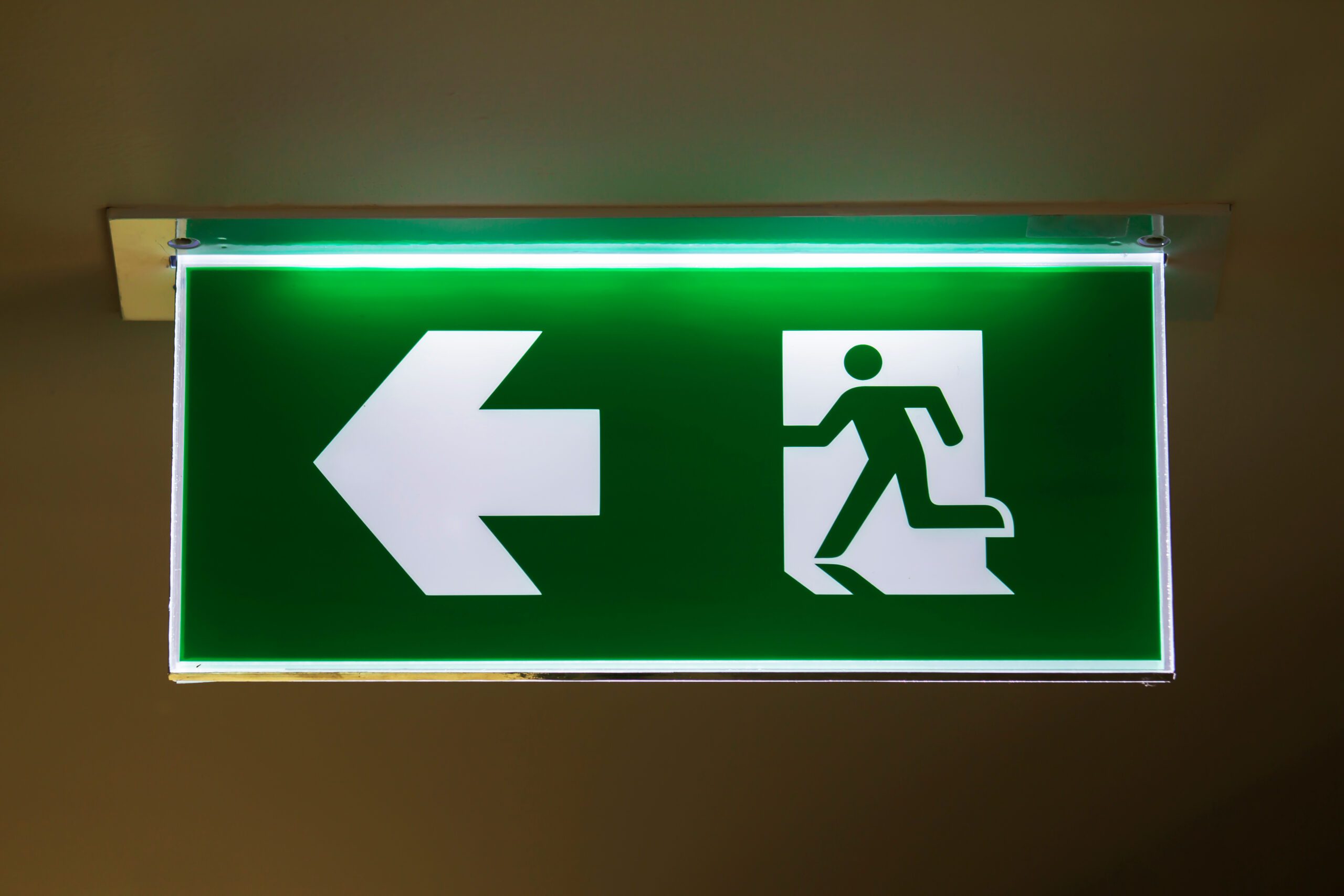
If your building has a correctly designed and well-functioning emergency lighting installation at the time of a fire or power failure, the emergency lighting is the primary means of guiding employees, customers, and visitors outside safely via the shortest route. This allows you to evacuate your workplace or building in the smoothest possible way, with the minimum risk of injury. Thanks to the emergency lighting, employees can also locate fire extinguishers, and it prevents panic among those present.

Not only in case of fire

Even without a fire, the power can suddenly fail due to an electrical fault. Proper emergency lighting then ensures that it does not suddenly become pitch black. Everyone can maintain their orientation, complete activities safely, and make their way outside in a secure manner.

Workplaces with increased risks

Also for workplaces involving increased risks, e.g., workplaces where work is performed on electrical panels, rooms with rotating parts, acid baths, hot or flammable materials, the emergency lighting provides sufficient light to shut down these processes in a controlled manner and to find the way out safely.

Request your risk analysis

In certain buildings, such as hospitals or residential care centers, it is safer not to evacuate. In these cases, local emergency lighting is now mandatory, and a risk analysis determines which lighting must be installed.

Jozef Mees

CEO RelyOn Electrical Services Belgium

Local emergency lighting in non-evacuation buildings Emergency lighting risk analysis

In December 2024, a new standard for emergency lighting came into force (EN 1838). It contains all lighting requirements for emergency lighting systems, such as light intensity and similar specifications.

One of the innovations in EN 1838 is emergency lighting in buildings where, in certain cases, it is safer NOT to evacuate, such as hospitals or residential care centers.

In these buildings, it is now mandatory to install local emergency lighting so that care can be fully continued even in the event of a power failure.

What emergency lighting should you provide, how strong should that lighting be, and what autonomy should the emergency lights have? This is determined on the basis of an emergency lighting risk analysis.

Increase the safety of your people

An emergency lighting risk analysis for local lighting increases the safety of residents, patients, and staff in buildings where care is central and where in certain cases – for example, when there is no immediate fire hazard – it is safer not to evacuate.

Customized risk analysis

We also provide customized solutions for an Emergency Lighting RA. Every building has unique needs and a specific use. No situation is too complex to find a solution for.

Act in a timely manner

By installing the correct lighting now, you prevent costly mistakes and unsafe situations.

Is your emergency lighting up to date?

Request an emergency lighting risk assessment.

Stay informed

New regulations regarding electrical safety, useful tips, and new training courses delivered directly to your inbox?