
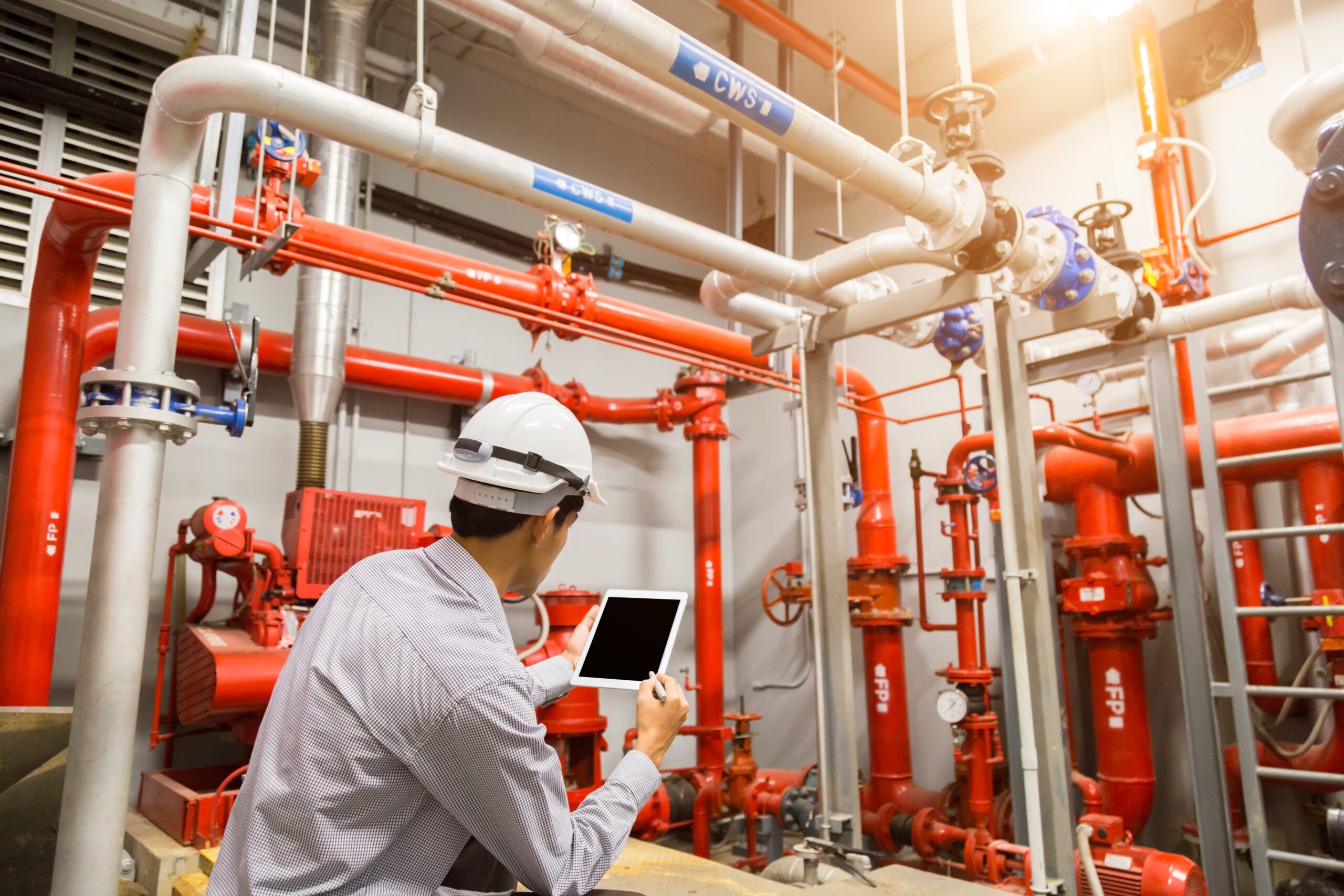
Risk analysis of safety installations Protect your employees in the event of fire and power failure
Since June 1, 2020, it has been mandatory for every operator of an electrical installation to have a risk analysis of safety installations. This document is part of the technical file of your electrical installation.
Our experts perform these risk analyses, following the necessary regulations from the new AREI. Your safety and that of your personnel is paramount, especially in emergency situations!
Risk analysis of safety installations What is it
Based on the AREI (General Regulations on Electrical Installations), our expert addresses the following components:
- Listing of safety installations + justification based on the relevant standard, legislation, or risk analysis;
- Determination of the minimum operating time (circuit integrity) of the safety equipment;
- Determination of the fire resistance of safety circuits and safety equipment;
- Determination of the characteristics of the safety sources:
- Determination of the power and number of safety sources;
- Determination of where the safety sources must be located;
- Determination of the minimum switch-on time in the event of a power failure;
- Determination of the location of the voltage measurement;
- Determination of the need to report malfunctions;
- Determination of which means must be activated when switching on the safety power supply;
- Determination of the frequency of changeover tests under full load;
- Determination of the switch-on sequence for the set of safety sources.
The safety installation list includes the measures to be taken as part of the risk analysis.
Subsequently, the safety installation must be indicated on the plans (situation diagrams). These also show the fire resistance of the various fire compartments (Rf value).
This ensures your building is fully prepared for a potential emergency and that your company is in legal compliance.
What you can expect from RelyOn What we do
- Identification of safety installations based on a standard, legislation, or risk analysis;
- Risk analysis of safety installations according to the AREI (see overview above);
- Determination of the safety room;
- Dimensioning of safety power supplies;
- Determination of the type of safety circuits to be used;
- Determination of the redundancy of safety equipment.
We support installers in the areas of
- Guidelines for constructing a safety installation;
- Guidelines for designing a safety power supply;
- Guidelines for designing a safety board;
- Guidelines regarding safety and communication circuits;
- Guidelines regarding the cable route to be followed;
- Guidelines regarding safety equipment.